

What does it take to create a birth center that truly serves its community—clinically, culturally, and emotionally? The Regions Hospital Birth Center was designed with this question in mind, taking a family-centered approach that integrates the latest care choices with the multicultural needs of mothers in the Twin Cities. In this episode of Side of Design, we take a deep dive into the design process as the hospital celebrates five years of impact.
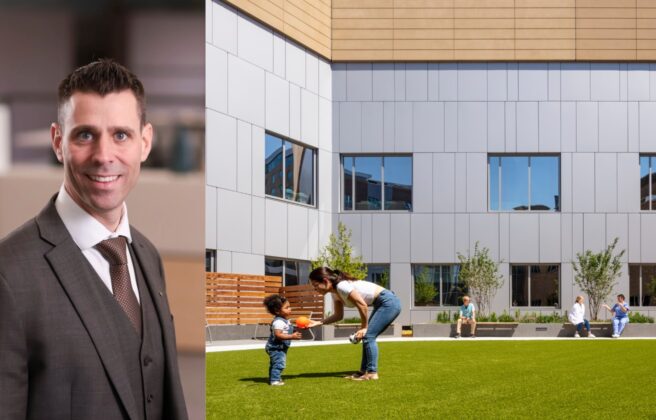
Joining the discussion are Rochelle Johnson, Vice President of Patient Care and Chief Nursing Officer at Regions Hospital, along with BWBR project team members—Principal Melanie Baumhover, who served as Project Manager, Principal Mike Boldenow, and Senior Healthcare Planner Sophia Skemp. The conversation explores the project’s vision, challenges, and—most importantly—how the birth center continues to transform care.
A Commitment to Care
When early conversations about the Birth Center began, the hospital was at a crossroads. With declining birth rates and an outdated facility, leaders at Regions faced a choice: “If we’re going to do this, we’re going to do it right,” Mike explains, “and if we’re not, we might take a step back and not do OB and birthing at Regions at all.”
Walking away would have meant leaving behind downtown Saint Paul, a diverse, urban city that relied on the hospital for accessible care close to home. Leadership chose to invest in the community, with a goal of becoming the chosen site for care across the greater East Metro.
“Women choose the facility they want to deliver in, and the environment makes a big difference,” Rochelle explains. A high-quality facility with thoughtfully planned rooms, progressive care models, and appealing amenities would help drive Regions to the top of the list for expecting families. “And in our case, being a facility that’s in the middle of the city, we also had to think about how we deliver care to ethnically diverse communities in a way that would make them choose us.”
Rochelle joined the organization just as that commitment was being made. “It was a unique opportunity for me as a new leader in an organization who had a dream about something different,” she says—a dream for a new facility that would be grounded in equity, family, and clinical excellence.
Creating a Shared Vision
Sophia compares a birth center to a “mini hospital within a hospital,” with just as many departments within one facility. “So how do we make sure it is an inclusive design process with so many players?” she asks.
Representation was critical, giving each department a seat at the table to provide feedback—not only during design meetings but also during facility tours and when viewing mock-ups. “It creates an environment of understanding, inclusivity, and a design that’s going to hopefully work for everyone,” Sophia says. Melanie shares that healthcare teams even ran scenarios in full-scale mockup rooms, leading to important discoveries to get spaces right for staff workflows.
With close to 400 clinical staff and provider groups and 75 rooms within the building, there were diverse opinions coupled with a need for continuity between spaces. “It was my job to say, what is our shared vision for what this space is actually going to look like?” Rochelle says. “And we had lots of conversations around what was important to not only our clinicians and our staff, but also the community that we served.”
Community Comes First
Rochelle says that the vision the team landed on five years ago is still shared with new staff members today. “It’s a place where we deliver high reliability, it’s family-centered, and it’s focused on healthcare equity.” This is particularly important in a hospital where “60% of our patients are people of color, 25% of them need an interpreter for their care, and more than 60% of them use some type of government program to pay for their care.”
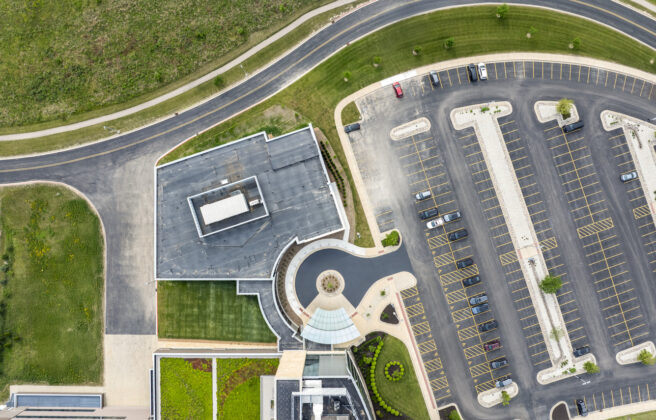
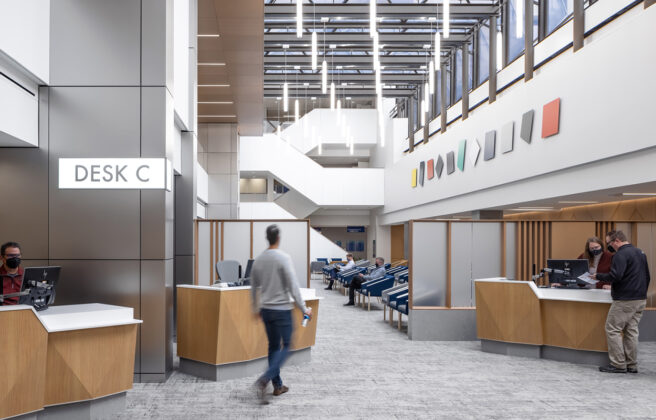
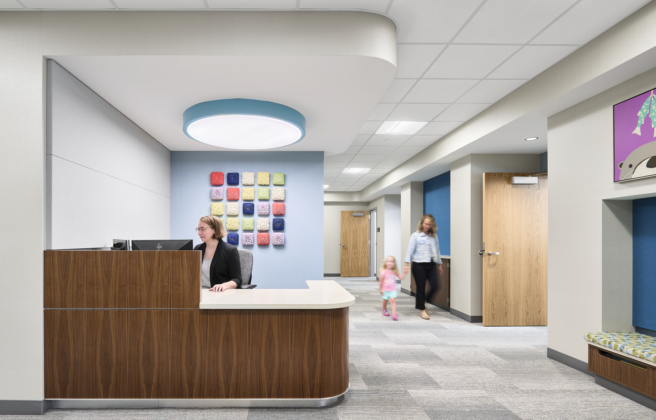
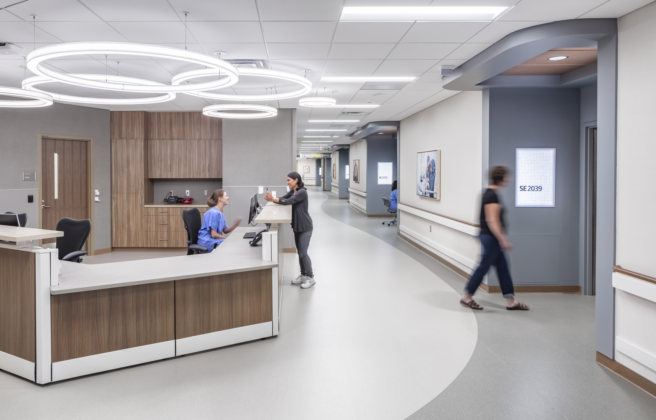
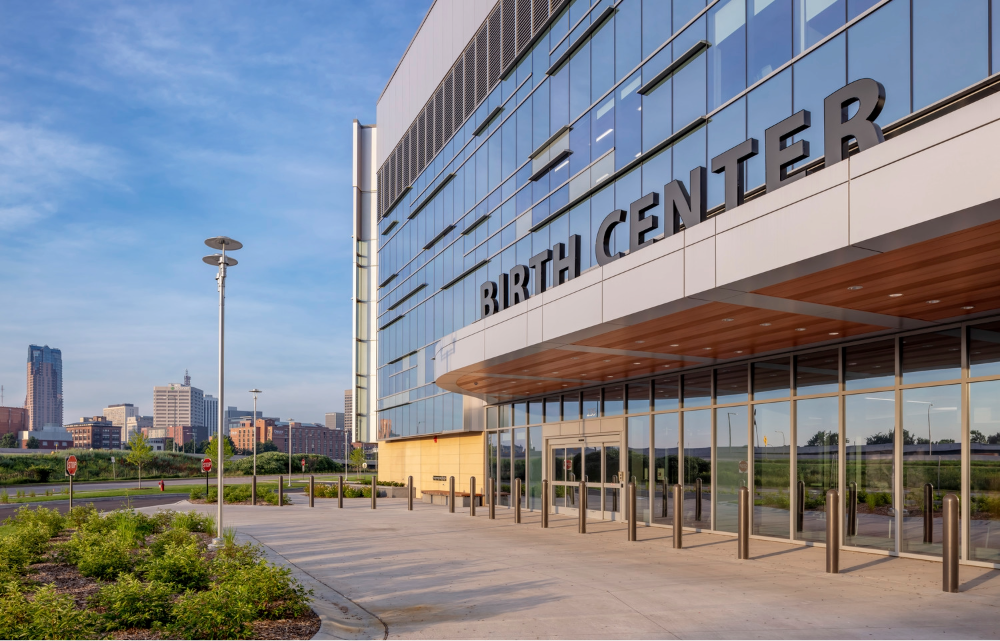
With large healthcare disparities impacting this population, it was crucial to create a truly comfortable and welcoming facility. “We made some intentional decisions to make it more of a hospitality-based service and building,” Mike explains. “It has its own dedicated patient and family entrance, separate from the main hospital on the other side of the campus, to make it feel special. You come into a very hospitality-driven lobby, and then even in the patient care spaces themselves.”
Rochelle’s partners and predecessors at Regions had built many community partnerships over the years. “We had the unique opportunity to go out to those community partners and ask our Hmong community, what would you want to see in a birth center?” she says. “We are part of an organization within the Twin Cities called the Birth Equity Community Council, and we brought topics there for the black community to learn what have traditionally been barriers to them feeling comfortable in the spaces we provide.”
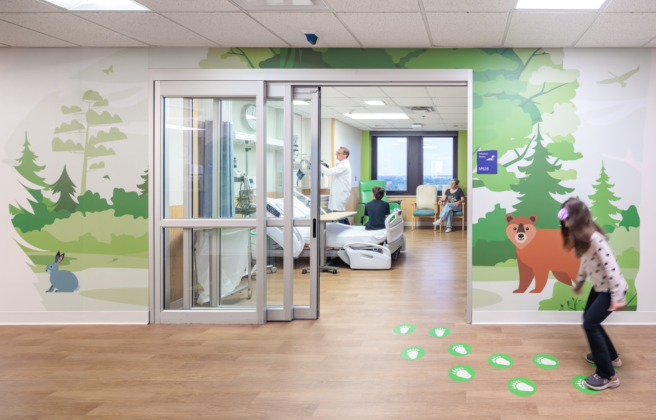
From bringing a traditional Hmong post-pregnancy soup to the hospital’s kitchens—working with the University of Minnesota and Regions’ nutrition services teams to grow the required herbs—to integrating artwork and imagery reflective of diverse communities, the goal was to create a hospital where every family would feel at home.
Quality Care, Thoughtfully Designed
To provide the highest quality of care, the team needed to utilize strategic healthcare design and progressive care models that would set the Regions Hospital Birth Center apart.
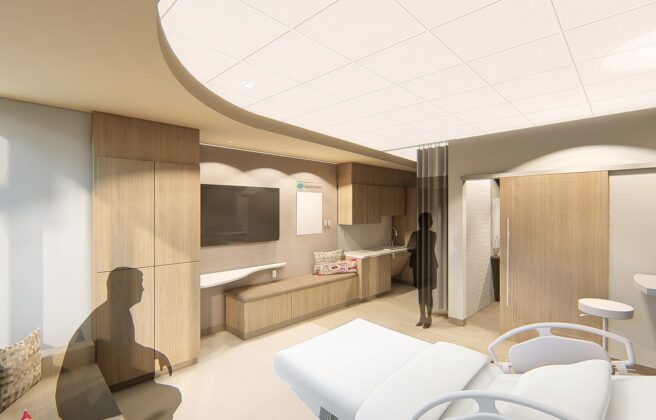
“Regions had the first couplet care in the state of Minnesota,” Melanie shares. As a mother who was separated from her own premature baby after birth, the inclusion of this care model hit home for her. “He was born, they brought him straight to the nursery, and I had to stay in bed. It was so emotional. So, when our consultant brought the idea of couplet care, where both the newborn and the mom are cared for in the same room, it was just so touching for me.” Rochelle says that in their first year, they were able to keep approximately 200 babies and mothers together who would otherwise be separated without couplet care design.
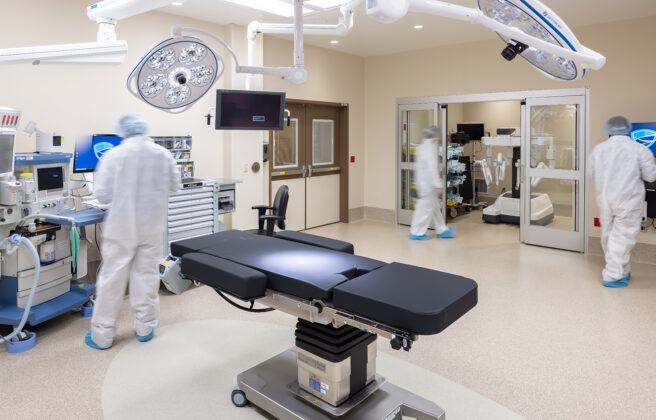
The design team shares that thoughtful design and amenities extended to every corner of the hospital—from hotel-inspired bathrooms and birthing tubs to comforting aesthetics in the operating room since most patients are awake for C-sections. And as Melanie adds, the hospitality extends to staff spaces too. “We have our staff break rooms on the outside wall with access to gorgeous daylight, which doesn’t always happen, and then access to the new courtyard that was developed as part of the building as well.”
Five Years of Impact
Five years after opening, the Birth Center has exceeded expectations: a projected 30% growth in births by 2025 was achieved, adverse outcomes related to postpartum hemorrhage dropped by 21%, and families across the risk spectrum receive care tailored to their needs. “Women’s lives are saved at Regions Hospital,” Rochelle says.
Looking back, the group agrees on what made the difference: start with a clear vision, build inclusive processes early, and bring people together—physically—around shared goals. “These projects only work when the guiding principles are clear,” Mike says. “They keep everyone aligned when decisions get hard.”
“Having the BWBR team come in and just be super ears open, listening to that passion that the clinicians and the staff had for the care that we provide to families was really important. And it made something that is actually serving the community in the way that they need,” Rochelle shares.
Together, the strong vision and collective teamwork transformed the Birth Center into more than a successful facility—creating an environment where compassion, community, and care come together to serve families for years to come.