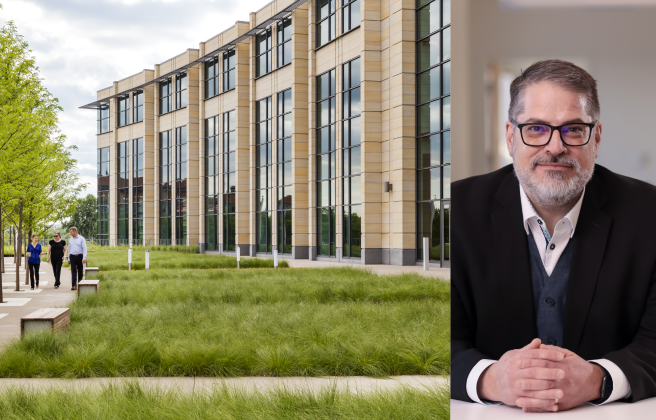
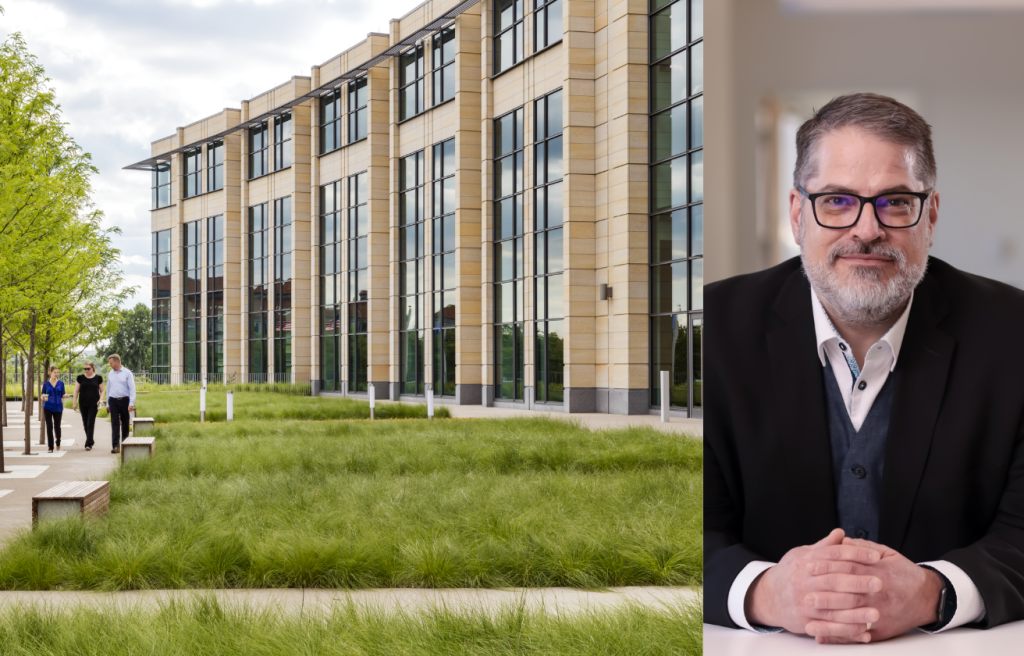


Bringing a building design from concepts and renderings to a completed facility is a complex and technical process. Playing a major part in making it happen is BWBR’s Dan Hottinger, Principal and Professional Services Director, who describes his role as “the bridge between design and putting the design in motion.” In this episode of Side Notes, he shares the latest innovations and challenges he sees impacting the AEC industry—and how professional services can help.
From Concept to Construction
Professional services encompass “everything that we do after we land the project and work on the design—to get it out in the field and built.” From specifications and documentation to code requirements and construction administration, Dan and his team confirm that everything in a design works correctly, is code compliant, and is implemented accurately during construction.
Dan’s role also uses data to help make strategic design decisions. Rather than basing choices in best guesses, “we actually have the data to back up and say, this is the size of the waiting room that you need in a medical situation, because we’ve actually went out there and monitored, and you don’t need 50 seats, 14 will do,” he explains. “And here’s why, here’s how we can prove it.”
He shares the importance of using data and strategic thinking to challenge notions. “How many times have you walked into a client meeting and they say they’ve always done it this way and it works?” Instead, Dan asks, “But what would make it great? What would make it work better?”
The Impact of AI
AI is making waves across industries, causing uncertainty as it evolves. But Dan explains that AI can lend itself to a much more efficient design process. “There’s some weirdness about it that we have to iron out. It’s not perfect,” he explains. “But it will allow for us to make more durable decisions earlier so that so that we can focus on the design once we have it.”
Dan dispels a common misconception that “AI is the death of creativity” as some people worry. “AI doesn’t have the ability to design a building. We still need that creativity within our design group.” Instead, AI can help the design team translate their ideas more efficiently, aid in brainstorming, or quickly generate adjustments to concepts.
“There was a day when we used to draw everything, right? On mylar with ink. Making changes was just pull your hair out time—oh no, that’s too late, we can’t change it now.” While today, changes still can’t quite be made with a “press of a button”, evolving technology has made it much simpler.
Balancing Ambition with Reality
Along with unpredictable changes in tech, the climate of the industry is always changing: “We have tighter budgets, shorter schedules, and high client expectations.”
With these challenges, “the biggest thing is balancing the project’s ambition with the reality,” he says. “Being able to have a team that can effectively come in and make sure that the project reaches the ambition that the client wants, while injecting the reality of sustainability, of codes, of all of the different review processes, and the time to get it done properly.”
He compares this balance to a sign posted in the auto repair shop his dad owned. “I think it fits in this industry. It had a triangle, and it said: cheap, fast, or good. The caption underneath it was, you can only have two of these.” Of course, everyone wants all three but, “if you want it super fast and super cheap, you have to cut corners somewhere,” he says.
While the design team can’t achieve it all, Dan says their job is to make it simpler. “We should be able to put a lot of the code and a lot of the sustainability stuff into easily digestible strategies for our clients. And that way in the end, we can help them see their project succeed.”
The Future of Professional Services
Dan explains that one piece of his position involves finding and mentoring the next generation of professionals. “I find the people who are coming in the next generation to be inspirational. I love interviewing them, I love meeting with them, I love when they come in and ask questions. They’re not weighed down by all of the preconceived notions,” he shares.
Emerging professionals bring fresh perspectives and new ideas that will continue to help the design profession evolve, but it’s just as important to pass along the knowledge that our industry veterans have learned over the years. “Teaching the next generation is so much fun. And I might even say it’s a little bit easier because oftentimes you can do it over Zoom, you can create videos and podcasts and things like that. So, it gives you a much wider base to start from and it also gives them something that they can go back to,” he says.
He notes that design is “one of those industries where you’re always learning,” even after nearly 30 years. To Dan, that’s what makes this profession so fun and engaging.