

Every year, NeoCon and Design Days provide a snapshot of where the design industry is headed. New products, new materials, new colors, and new ideas all compete for attention across the events’ hundreds of showrooms and installations.
This year, however, the biggest takeaway wasn’t a particular furniture collection, finish, or technology. It was something much larger: people are craving emotionally rich spaces. Recently, commercial interiors have celebrated restraint, with minimal, quiet, and highly optimized spaces often gaining the most admiration. While undeniably beautiful, many environments prioritized efficiency over emotion.
Walking through the showrooms this year felt different. Products and materials weren’t trying to blend into the background, they were trying to make people feel something. Here’s a look at the standout ways we saw this in action:
Color is Back—and It’s Here to Stay
Perhaps the most noticeable shift throughout NeoCon and Design Days was the return of color—not as a single accent chair in an otherwise neutral room, but as a defining design strategy. Across showrooms, designers embraced saturated hues and unexpected combinations throughout furniture, textiles, architectural elements, lighting, and accessories.
Several color families appeared repeatedly:
- Oxblood and berry tones
- Periwinkle and blue-violet hues
- Blues ranging from sky and cornflower to cobalt and navy
- Deep evergreen and juniper greens
- Vibrant oranges and persimmon tones
- Rich espresso and cocoa browns
- Chrome and reflective metallic finishes
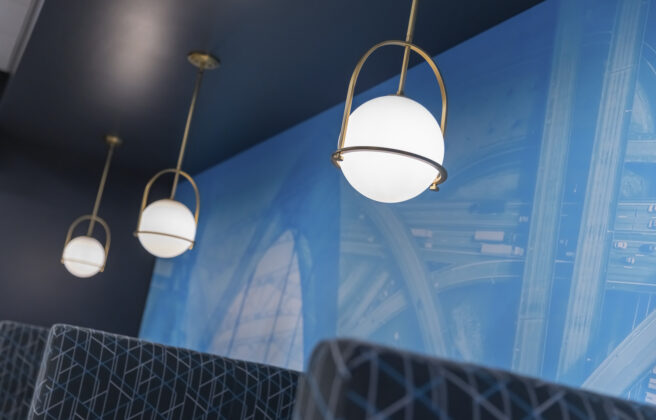
What made these palettes particularly interesting wasn’t just the colors themselves—it was the bold ways they were being paired together: periwinkle with orange, oxblood with evergreen, cobalt with orange, and espresso with chrome. Designers seemed less interested in playing it safe and more interested in creating memorable experiences through bold combinations.
The Rise of Color Drenching
One of the strongest trends was the continued evolution of color drenching.
Rather than introducing color as a small accent, many showrooms committed fully to a palette and carried it throughout furniture, finishes, textiles, and accessories. This created spaces that felt immersive, cohesive, and emotionally impactful.
The result was a greater sense of identity and character—something many workplaces, healthcare environments, and educational facilities are increasingly seeking as they compete for attention, engagement, and connection.
Layered Maximalism Emerges
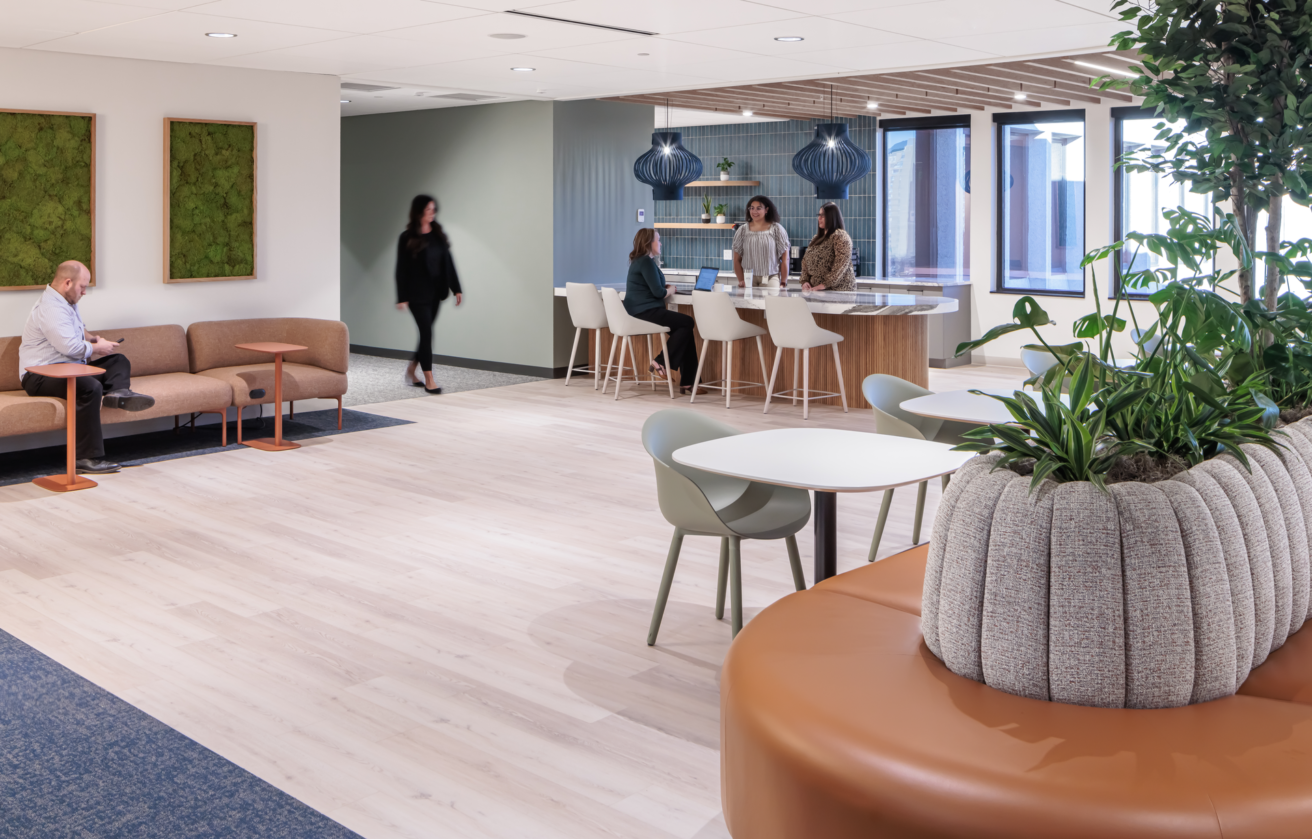
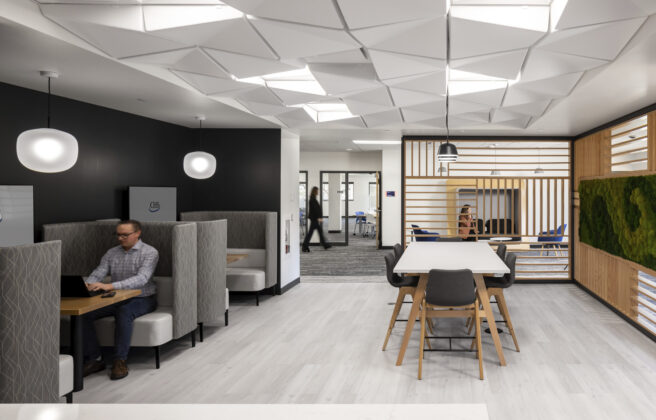
Minimalism and maximalism are coming together to create a new evolution in how space is utilized. Many of the most compelling showrooms embraced what could best be described as layered maximalism—a more refined version of maximalist design that prioritizes richness over clutter.
These environments combined:
- Multiple textures
- Decorative lighting
- Greenery
- Drapery
- Sculptural furniture
- Rich materials
- Layered accessories
While minimalism can feel empty and maximalism can feel overwhelming, these environments combined the best of both philosophies, resulting in curated and expressive spaces.
Taking Inspiration from the Past
Mid-century modern influences like organic curves and natural elements merged with manufactured materials were still on the rise, particularly in furniture detailing and silhouettes. However, these references felt less nostalgic and more contemporary, often combined with hospitality-inspired materials and richer color palettes.
Curves continue to dominate over straight and sleek lines, with rounded seating, circular tables, radiused corners, and softened architectural details appearing throughout countless product introductions.
After years of matte black as the popular choice for finishes, reflective metals made a noticeable return. Chrome, bright nickel, and polished metallic finishes appeared throughout furniture, lighting, and architectural details. These materials introduced energy, light, and visual contrast while reinforcing the broader shift toward more expressive environments.
Hospitality Shaping Commercial Design
A theme that appeared throughout the week was the continued influence of hospitality and residential design. Workplaces, learning environments, and healthcare settings increasingly borrowed from the warmth, comfort, and character traditionally associated with hotels, lounges, and homes.
Bold designs with rich identities and curated details are helping to create a distinctive sense of place in commercial environments. A renewed emphasis on comfort in furniture and textiles is enhancing social connection and wellbeing, creating places where people want to gather and collaborate. Spaces also emphasized flexibility, encouraging users to shape their environments to work for their needs.
Rather than focusing primarily on function and efficiency, designers are creating destinations that feel inviting and meaningful—places where people genuinely want to spend time and connect.
The Bigger Story
Interestingly, this movement mirrors what has already happened in fashion. After years of quiet luxury, beige capsule wardrobes, and understated palettes, fashion embraced rich colors, bold patterns, maximal accessories, and more expressive styling. Now, interiors appear to be following a similar path.
The shift isn’t really about burgundy upholstery or chrome finishes, it’s about emotion. It’s about creating spaces that foster comfort, connection, delight, and memorable experiences. The biggest trend of NeoCon and Design Days 2026 wasn’t a color, material, or furniture collection. It was a renewed focus on how spaces make people feel.
The result is a new generation of environments that are warmer, richer, more expressive, and unapologetically human. And perhaps that’s the most important trend of all. The future of design isn’t less personality. It’s more.