

As a new generation of mothers reshape expectations around childbirth and postpartum care, family birth centers are evolving well beyond the traditional labor-and-delivery model. Today’s families are seeking experiences that balance personalized, compassionate care with clinical excellence, supported by environments that feel intuitive, dignified, and human.
For healthcare systems, this evolution presents both a challenge and an opportunity. Thoughtful planning and design can align patient experience, operational efficiency, and provider well-being, creating spaces that perform as well clinically as they feel emotionally.
In a healthcare setting where urgent needs and life-changing moments intersect, the stakes for good design are high. Rapid assessments at intake, seamless communication among care teams, and spaces that support mothers, infants, and families simultaneously are no longer optional. Forward-thinking birth center design can streamline workflows, improve outcomes, and deliver meaningful experiences during one of life’s most pivotal moments.
Caring for Mothers and Infants: Couplet Care
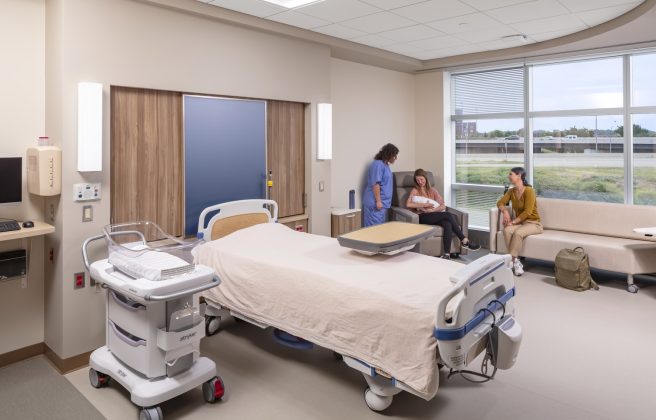
One of the most significant shifts in postpartum care is the growing adoption of couplet care, an evidence-based model that keeps mothers and newborns together throughout recovery. By minimizing separation, couplet care supports early bonding, breastfeeding success, and improved satisfaction for families, while also enhancing care coordination among providers.
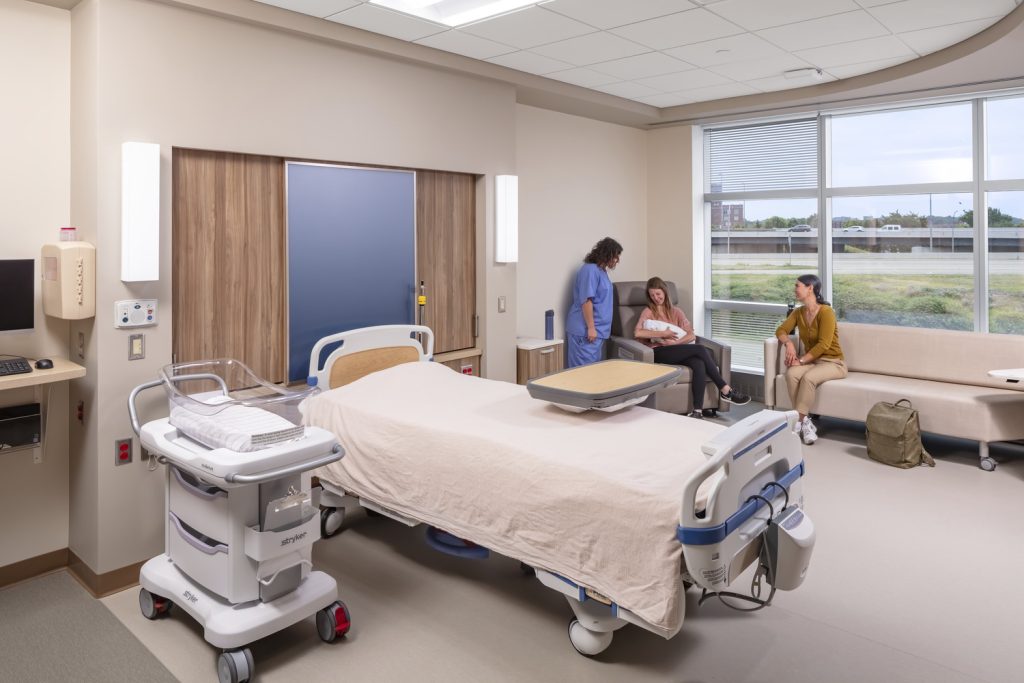
Design plays a critical role in making couplet care successful. Patient rooms must balance a calm, residential feel with immediate access to clinical support, medical gases, equipment storage, and staff visibility. Even in complex environments, such as hospitals with Level III NICU capabilities, design strategies can support couplet care through direct adjacencies, acuity-adaptable rooms, and clear circulation that allows rapid escalation when needed.
The result is an environment that supports both normal birth experiences and high-acuity care without compromise.
Designing for Every Family
No two families experience childbirth the same way, and birth center design must reflect that diversity. From multicultural households to families welcoming multiples, growing through surrogacy, or adopting newborns, flexibility and inclusivity are essential.
Generously sized patient rooms allow space for partners, siblings, doulas, and extended family, providing emotional support without disrupting clinical care. Thoughtful storage, convertible furniture, and adaptable layouts help rooms function across a range of scenarios and lengths of stay.
Multilingual signage and intuitive wayfinding promote dignity and ease of navigation for all families. Designated spaces for surrogate and adoptive parents acknowledge that families are formed in many ways, reinforcing a message of belonging and respect.
Hospitality with Purpose: Creating Home-Like, Healing Environments
Today’s families expect more than functional care spaces. They want environments that feel supportive, calming, and connected. In response, many birth centers are embracing hospitality-inspired design, without losing sight of safety or efficiency.
Common features include:
- Birthing tubs and showers to support natural labor and pain management
- Family zones or play areas that welcome siblings
- Access to healthy food options and nutrition spaces for longer stays
- Outdoor terraces or access to daylight and nature
- Quiet or meditation spaces that support emotional and spiritual well-being
- Warm materials, calming lighting, and artwork that move away from a sterile, institutional feel
These elements are not simply aesthetic upgrades, they contribute to reduced stress, improved satisfaction, and better overall experiences for families during a vulnerable and transformative time.
Supporting Providers: Designing for Caregiver Well-Being
Exceptional patient care starts with a supported care team. As workforce challenges continue across healthcare, birth center design must actively address staff well-being, efficiency, and retention.
High-performing facilities incorporate:
- Dedicated respite and recharge spaces for staff
- Private lactation rooms for team members who are also new parents
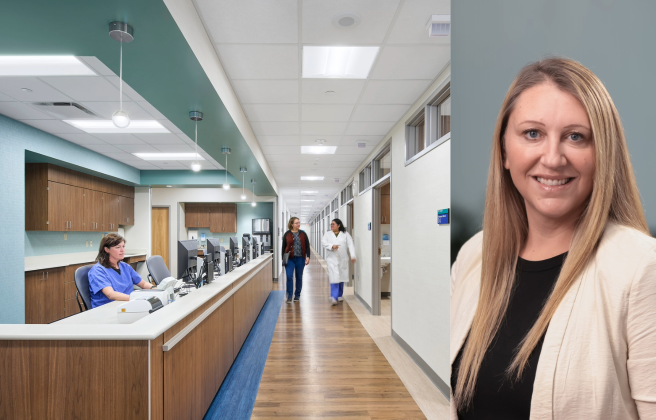
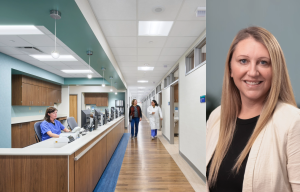
- Decentralized charting and team work zones that support real-time collaboration
- Clear sightlines and efficient adjacencies that reduce steps and cognitive load
By reducing friction in daily workflows and creating environments that respect the physical and emotional demands of caregiving, birth centers enable providers to focus on what matters most, delivering safe, compassionate care.
Planning for the Future of Women’s and Children’s Care
As models of care continue to evolve, birth centers must be designed with flexibility in mind, and have the ability to adapt to changing technologies, care protocols, and patient expectations over time. Early planning decisions around room size, infrastructure capacity, and adjacencies can significantly impact long-term performance and return on investment.
Our team works alongside healthcare leaders to translate emerging trends, evidence-based design, and operational goals into environments that are resilient, adaptable, and deeply human. Through our ongoing focus on women’s and children’s health, we help teams ask better questions, test new ideas, and design spaces that will serve families for decades to come.
Let’s design a future where every birth is supported, every family is welcomed, and every provider is empowered.